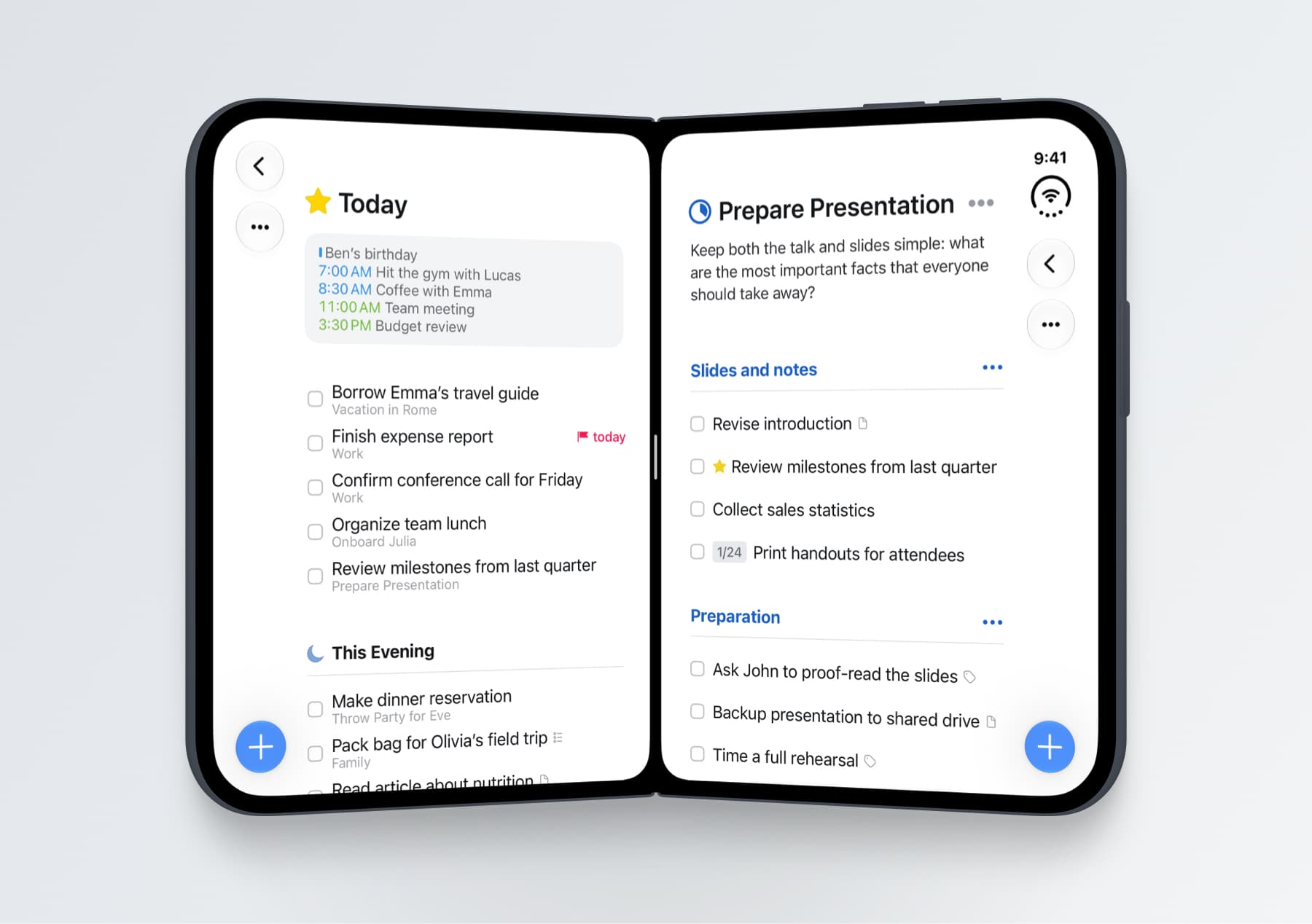
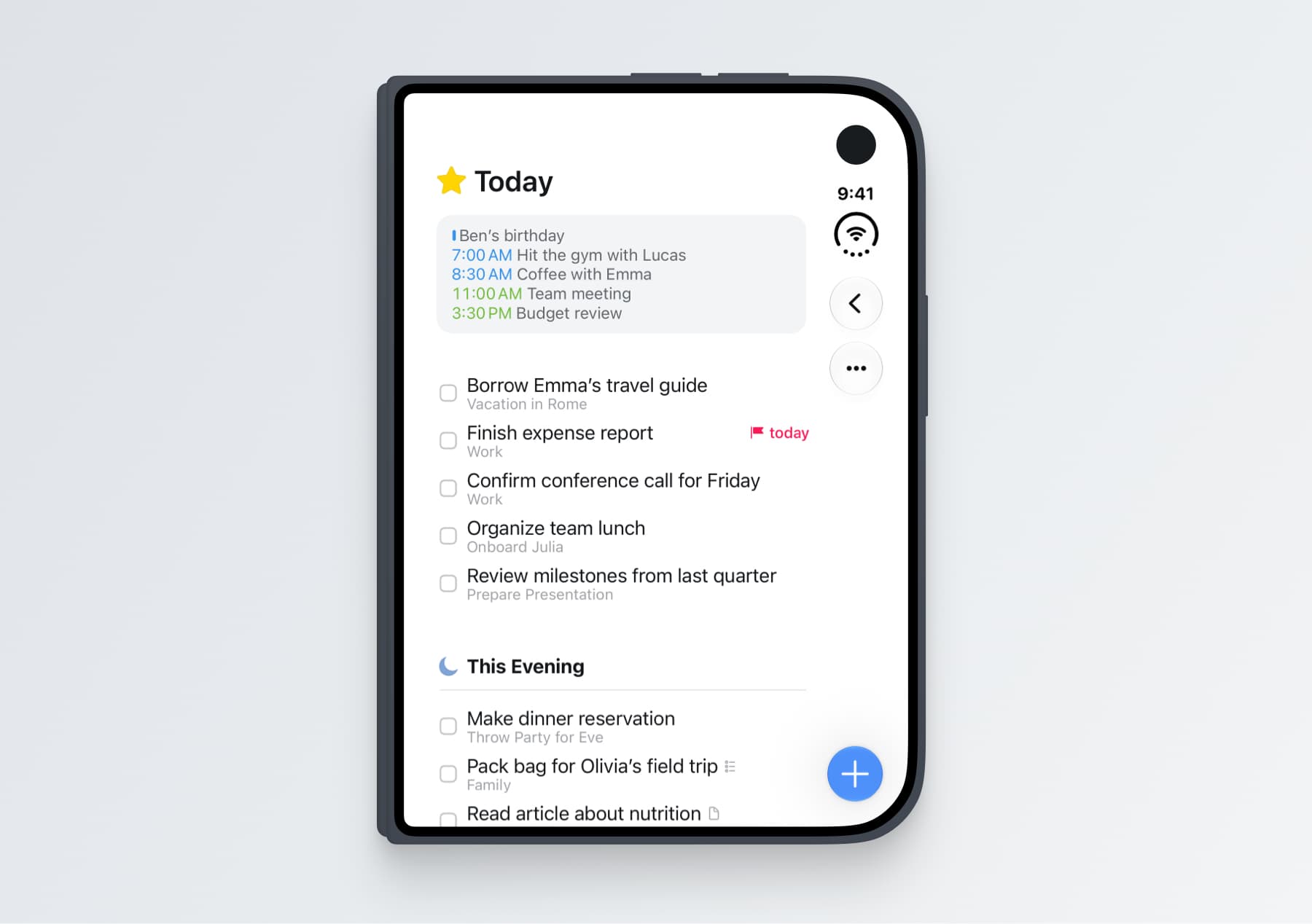
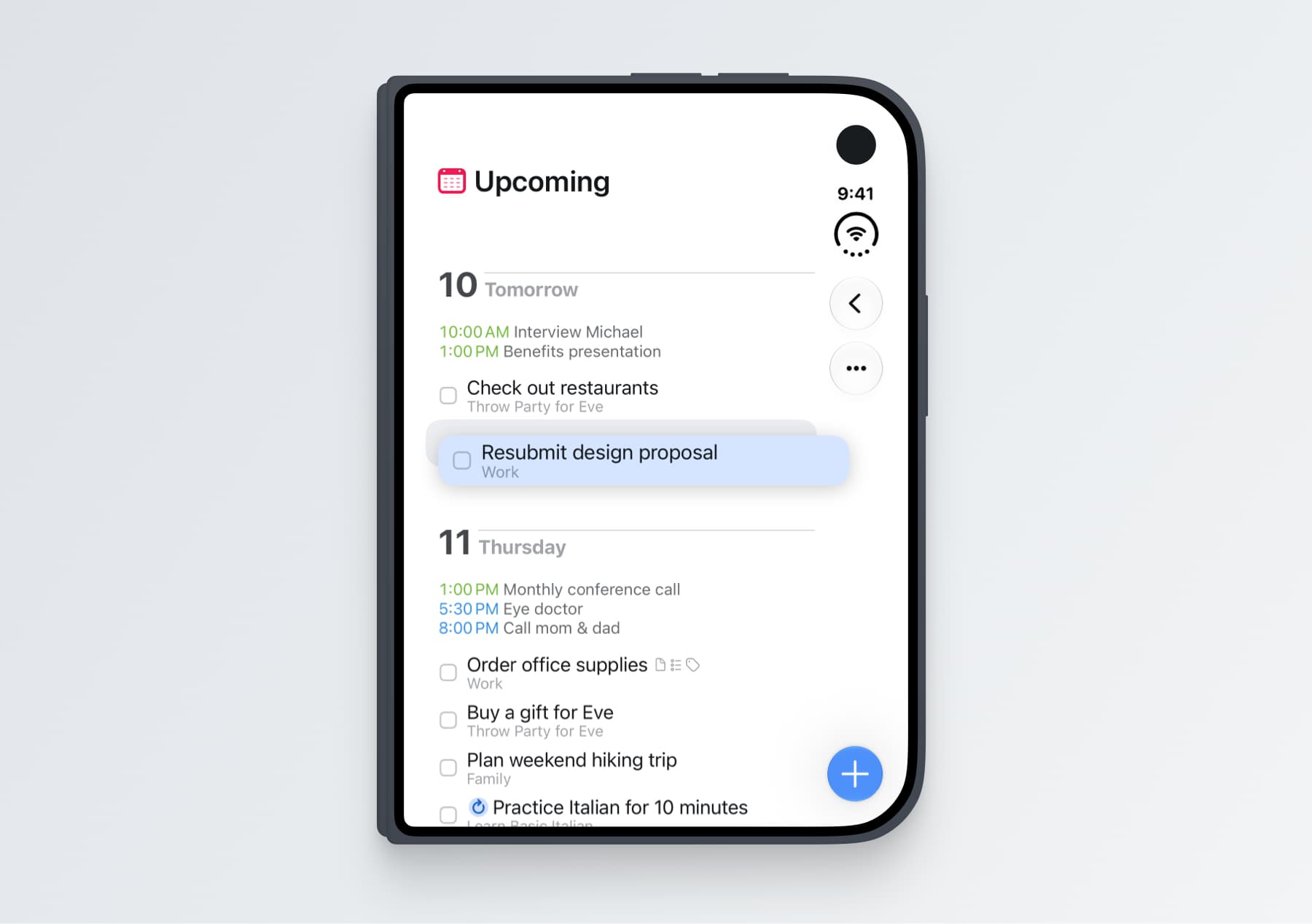
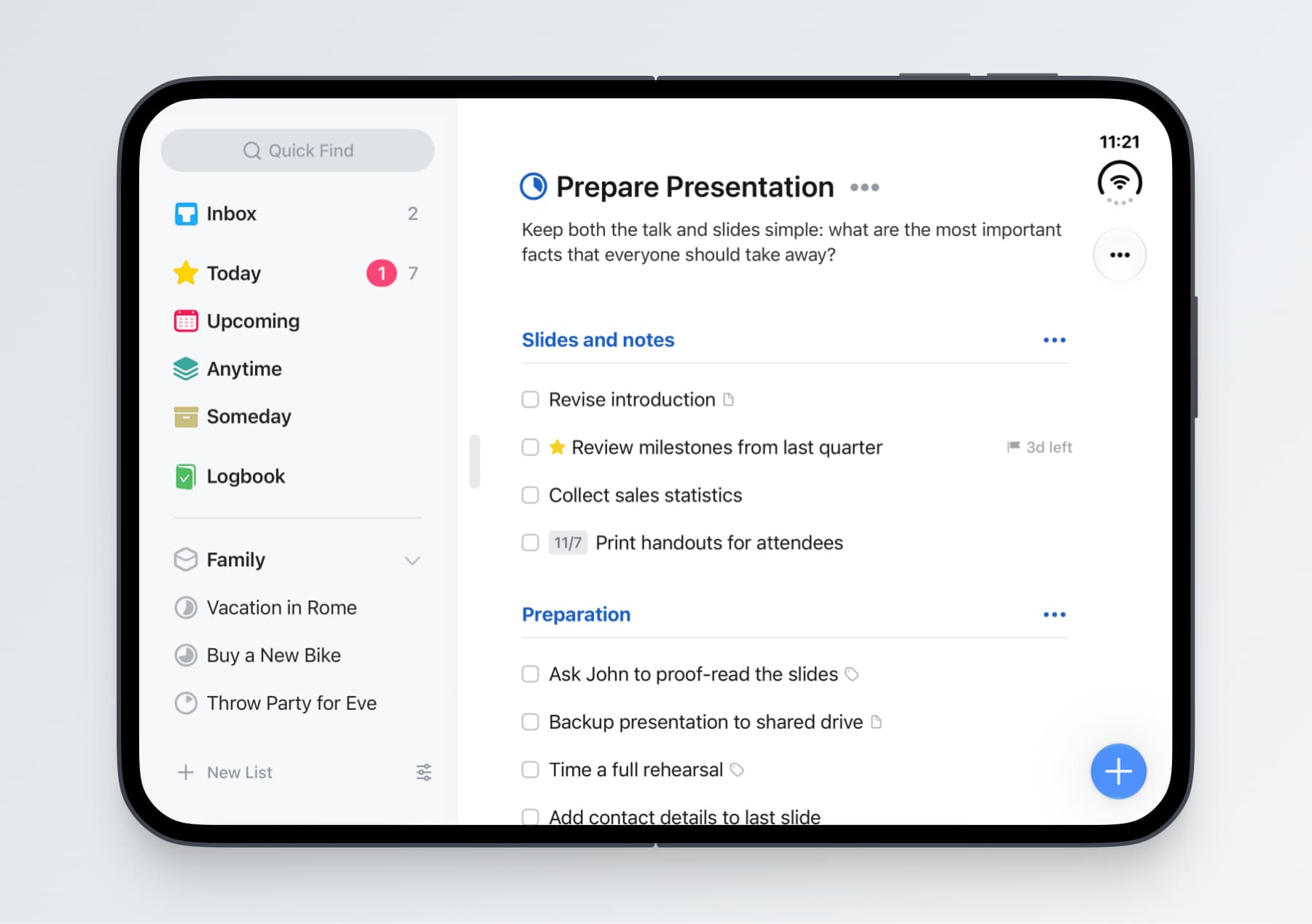
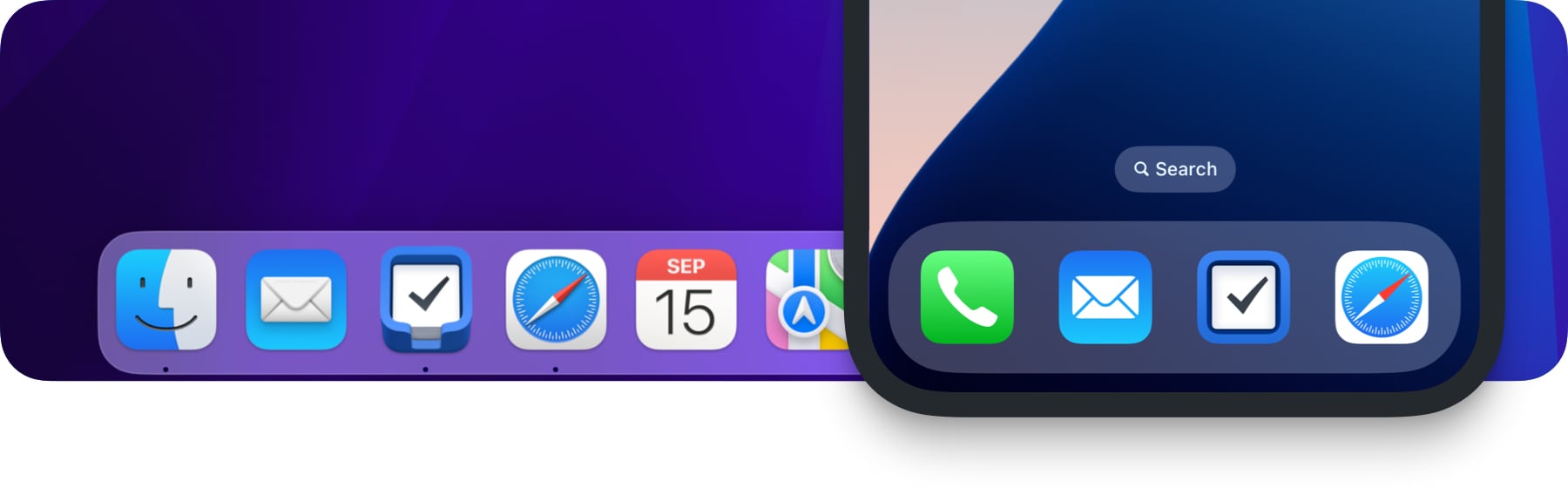
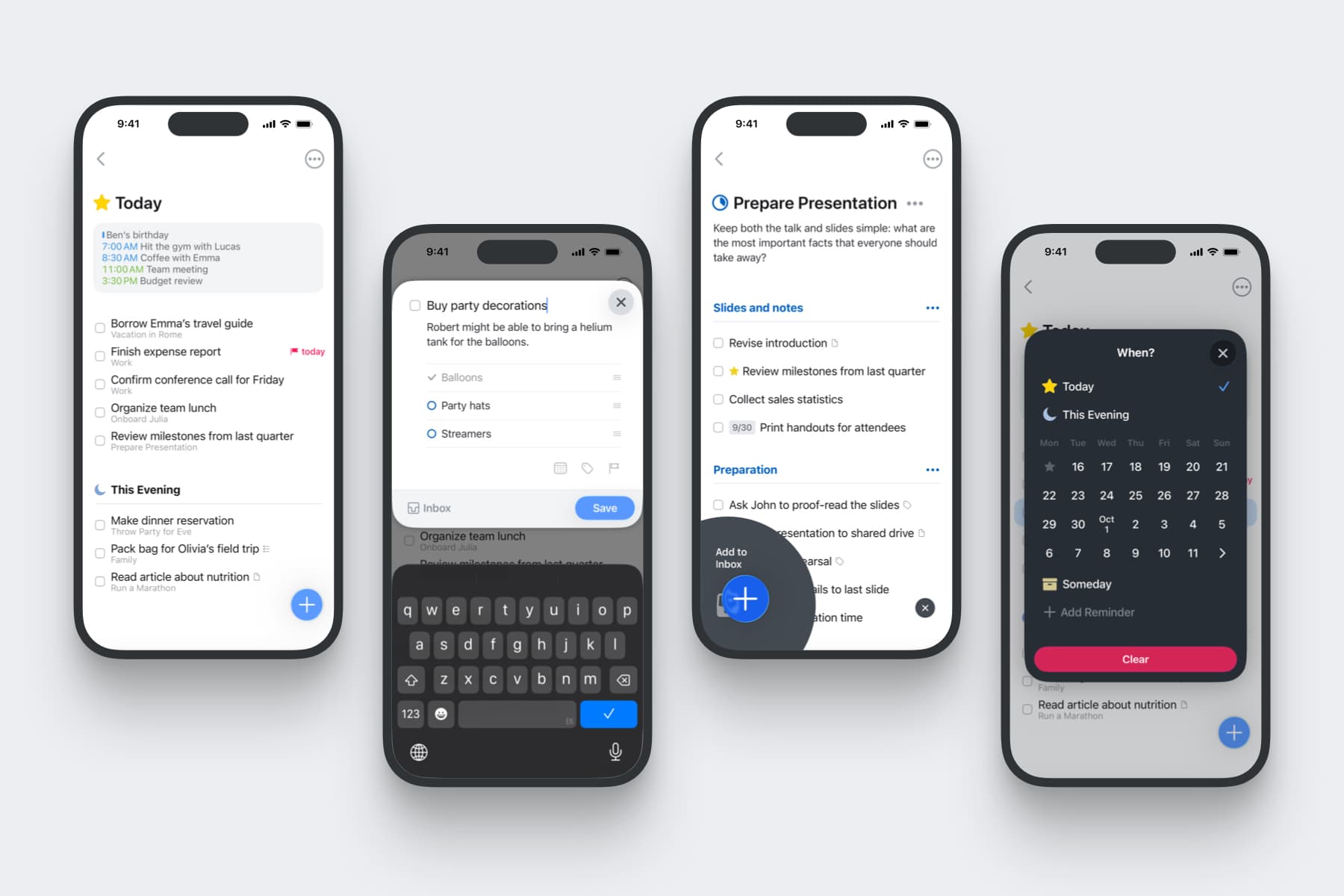
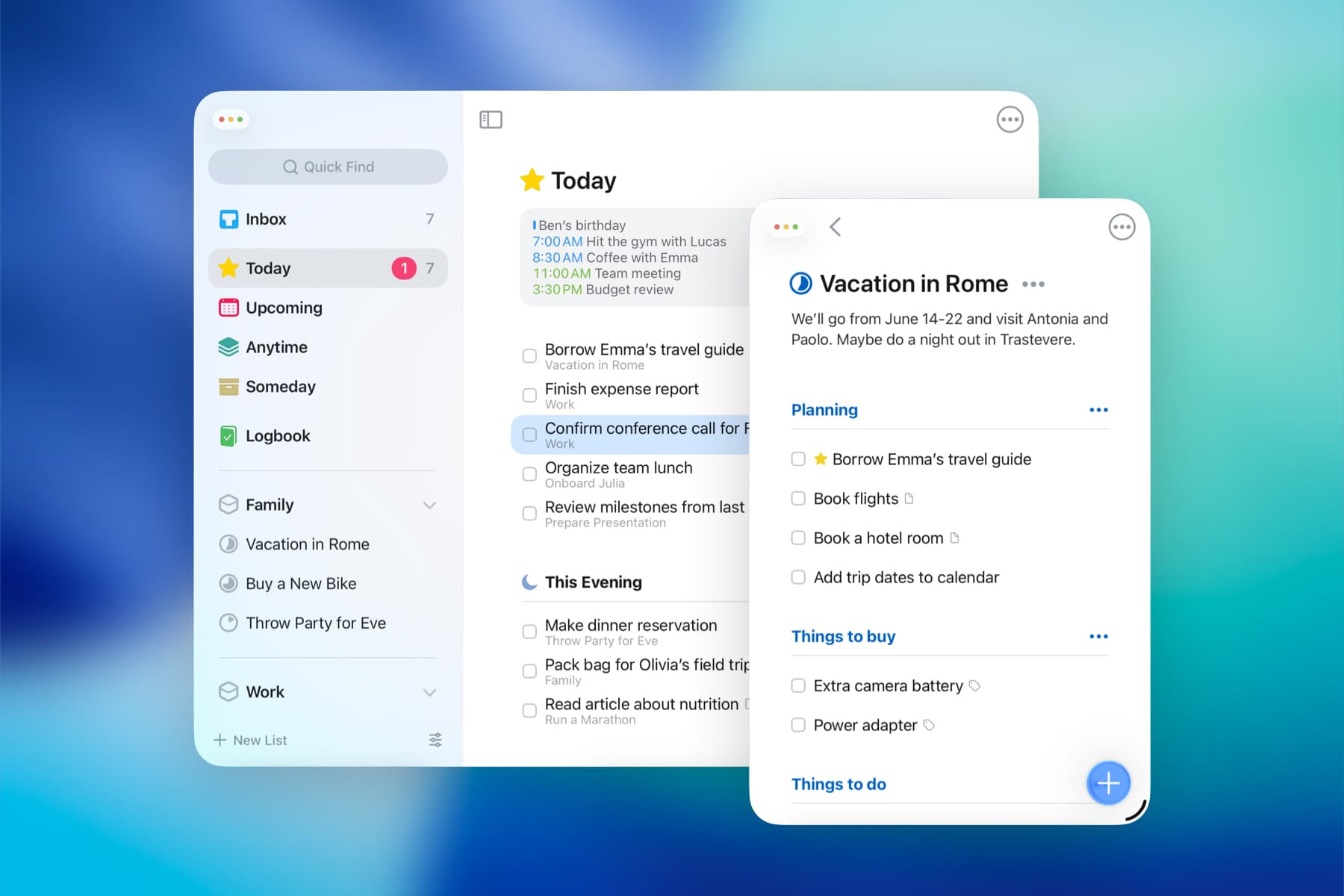
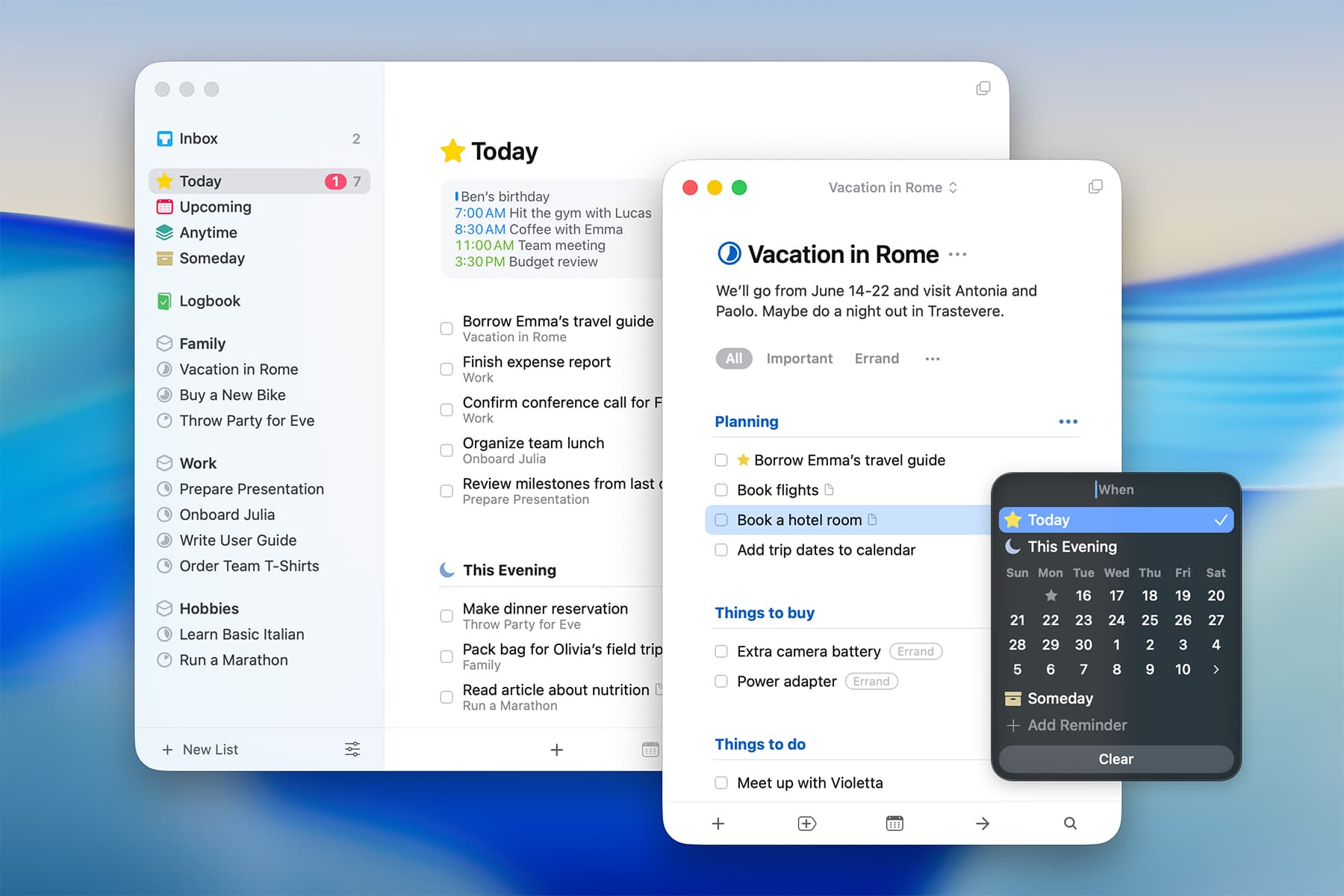
The iPhone Duo launches today, and Things is ready to go. We’ve tailored the app with a dynamic layout that looks perfect in every pose. Available now in Things
3.25.
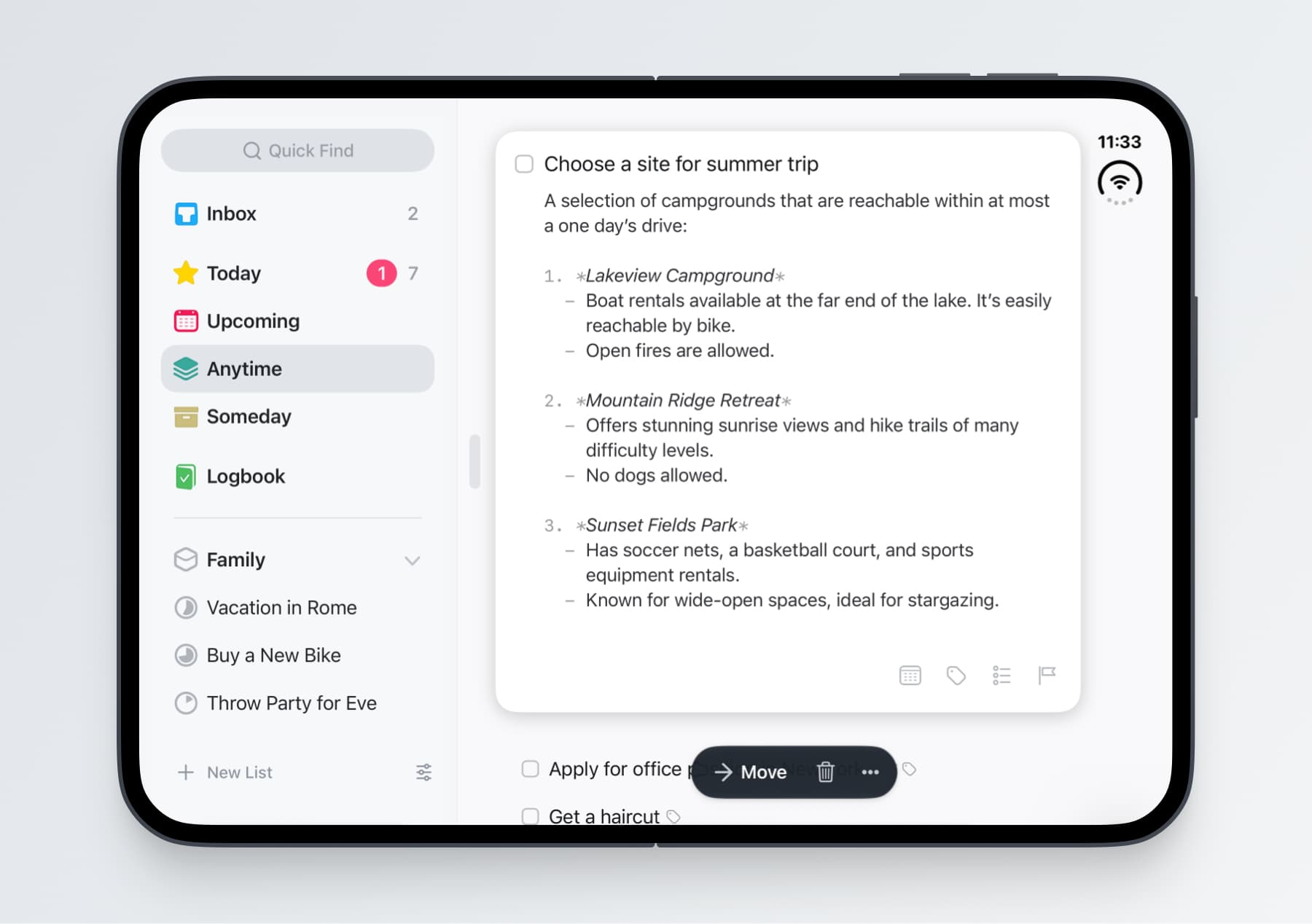
We think you’ll love using Things on the Duo. When we first held the Duo, we were struck by how its wider screen and extra white space give Things the
feel of a paper notebook. Things’ interface has always been free of distractions, but with the buttons now tucked away at the side, that paper-like
feeling really comes through.
Open up the device and Things’ sidebar appears, letting you quickly switch between lists. Hide it whenever you want the list to take over the full screen
– or simply rotate to portrait, where Things does that automatically.
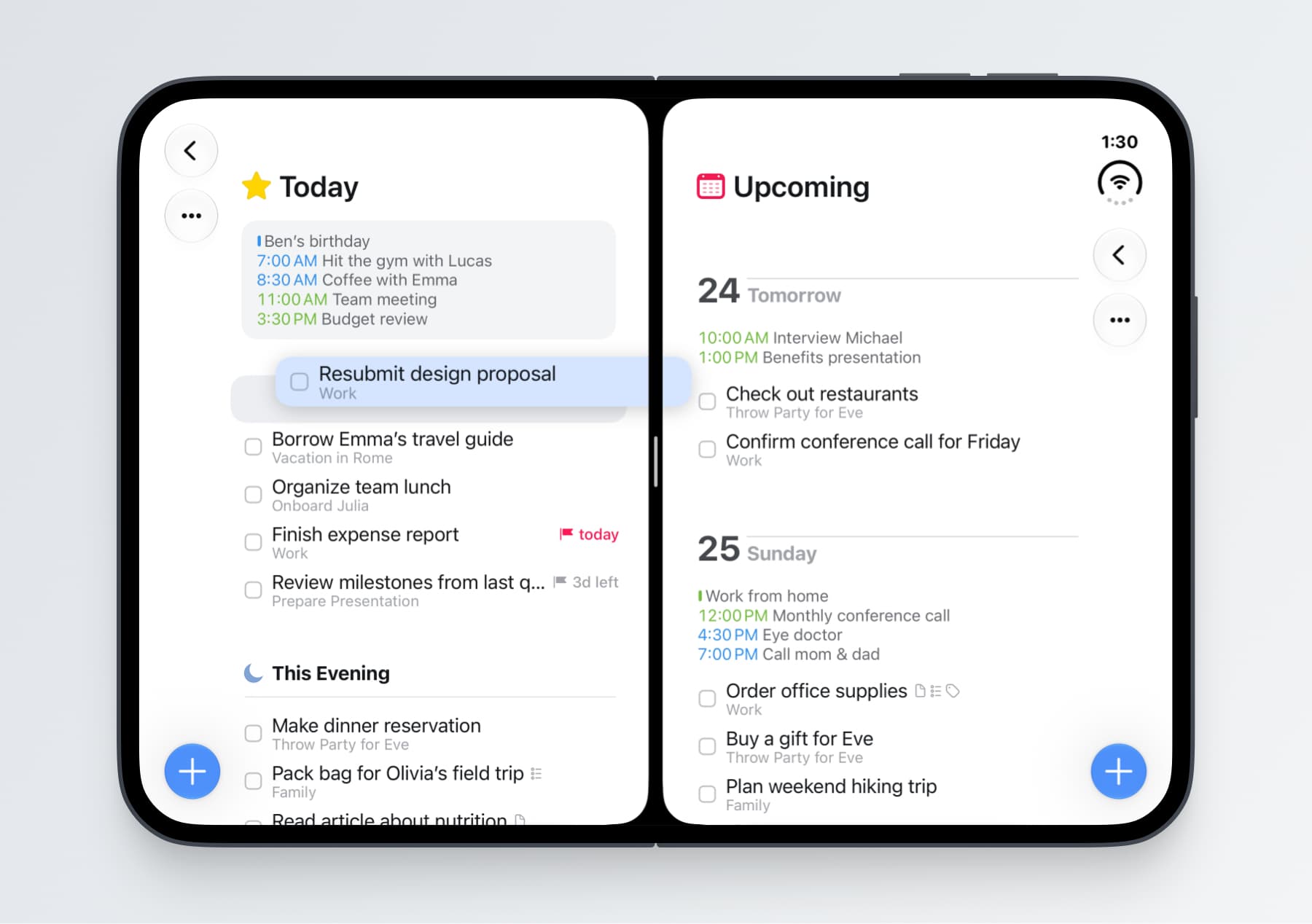
Finally, our favorite new way to use Things on the Duo is to put two Things windows side by side. Open different lists and simply drag and drop your to-dos
between them – it’s great!
1
2
3
4
5
6
Two more things worth noting:
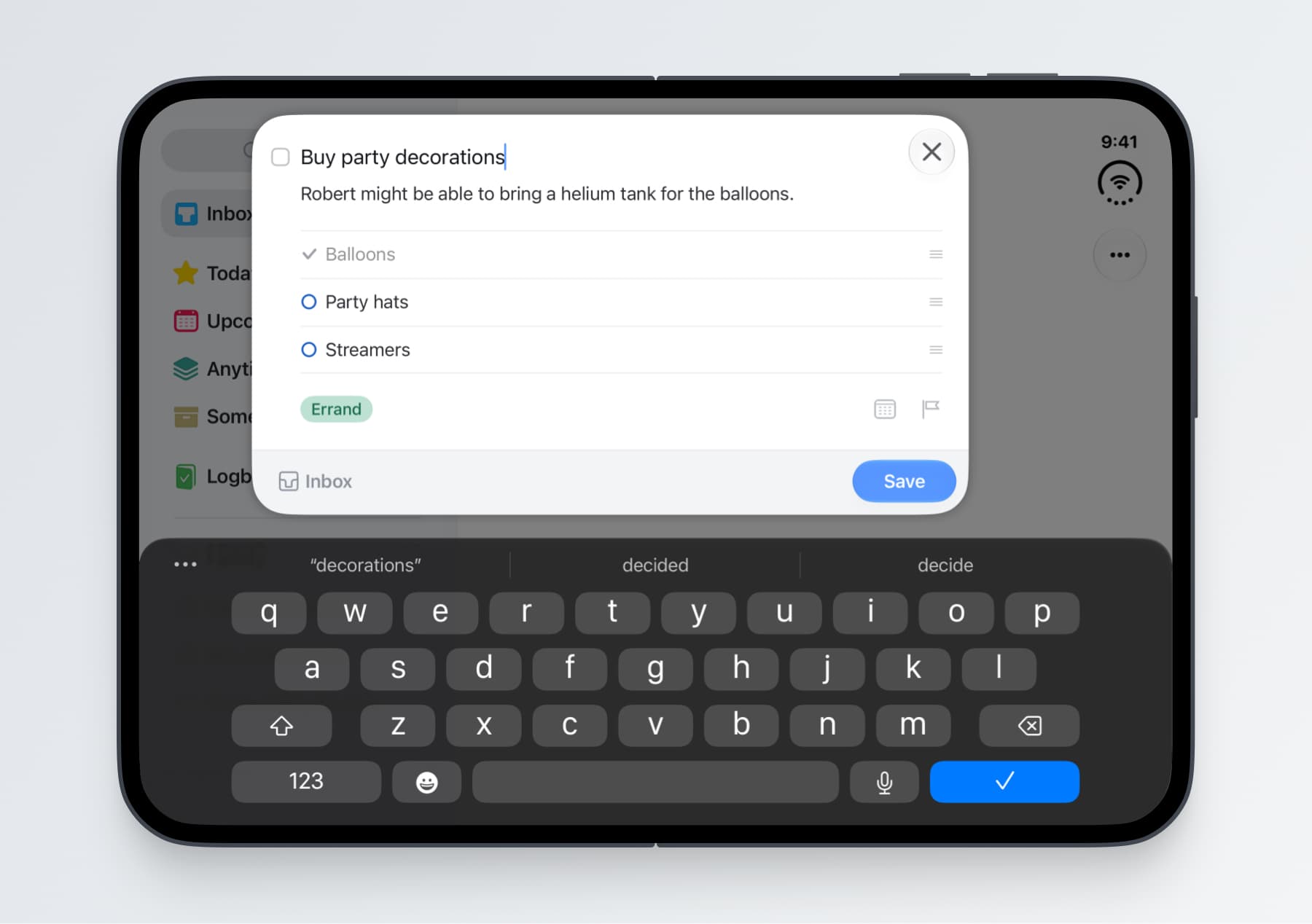
Things’ signature Magic Plus button works beautifully on the Duo: drag it off the toolbar and drop it anywhere in a list to insert a to-do exactly
where you want it.
With a keyboard attached, the Duo gets Things’ full desktop-class keyboard support: a persistent selection, the complete set of shortcuts, and Type
Travel for jumping between lists.
Things for iPhone Duo is available now; simply update to Things 3.25 on the App Store. We look
forward to hearing what you think!
Things is ready for Apple’s OS 27, with support for the new
Siri AI, integration with Spotlight, better snooze options, a new extra-tall widget, and other refinements. Available now in Things 3.24!
Siri AI (Beta)
Today, with OS 27, Apple is releasing a more capable version of Siri, called Siri AI. It’s being released as a beta version, which means it’s
early days – at present, it’s only available in English, only available in some regions, and only available on modern hardware.
Nonetheless, for those of you who do have access to Siri AI, and would like to kick the tires, Things is ready. We’ve done everything on our side to
fully integrate. Let’s look at some of the improvements.
Speak more freely
Things has worked with Siri for almost a decade, allowing you to dictate to-dos on the go. The problem was that if you didn’t stick to very specific phrases,
it would easily fail.
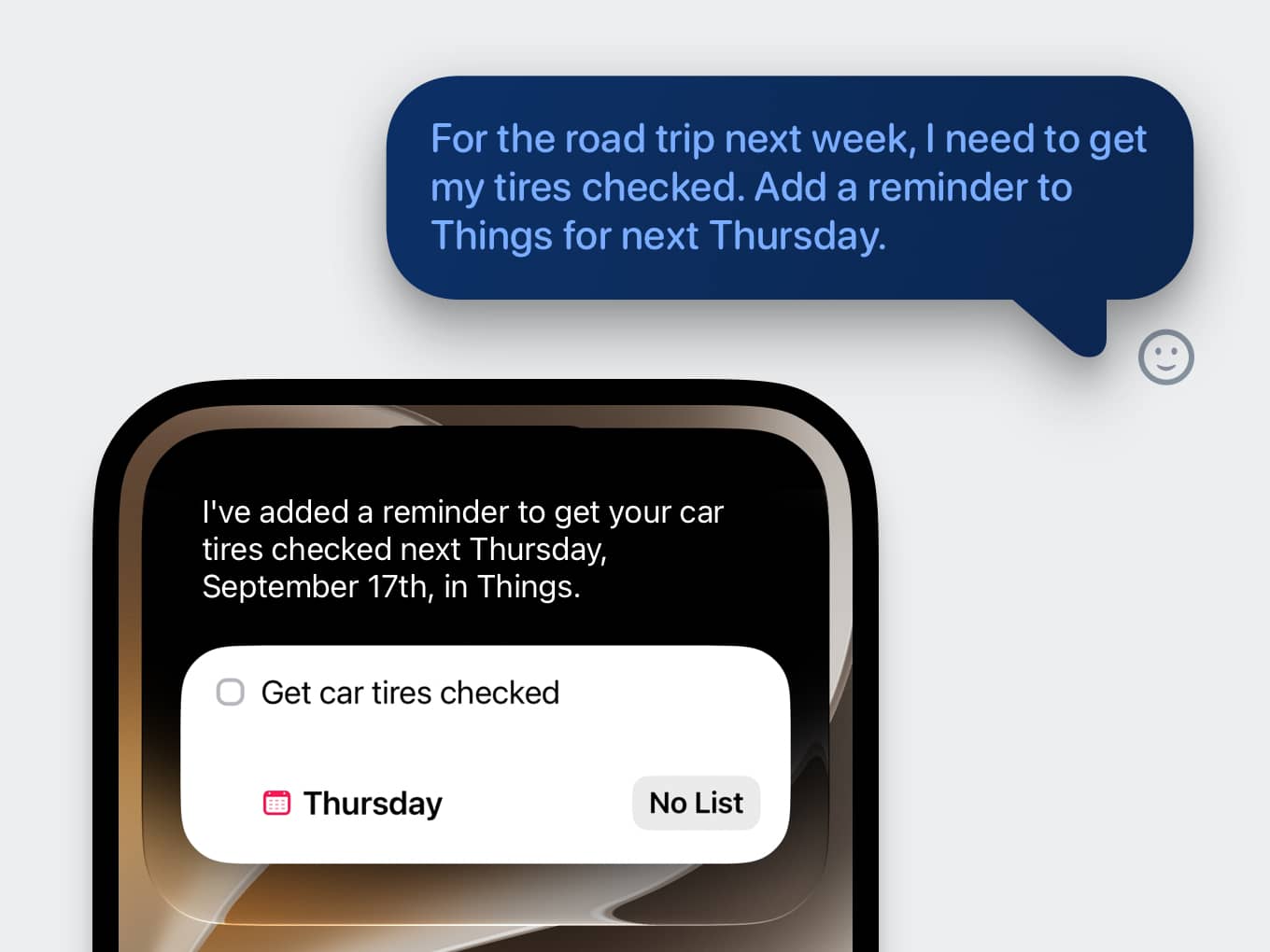
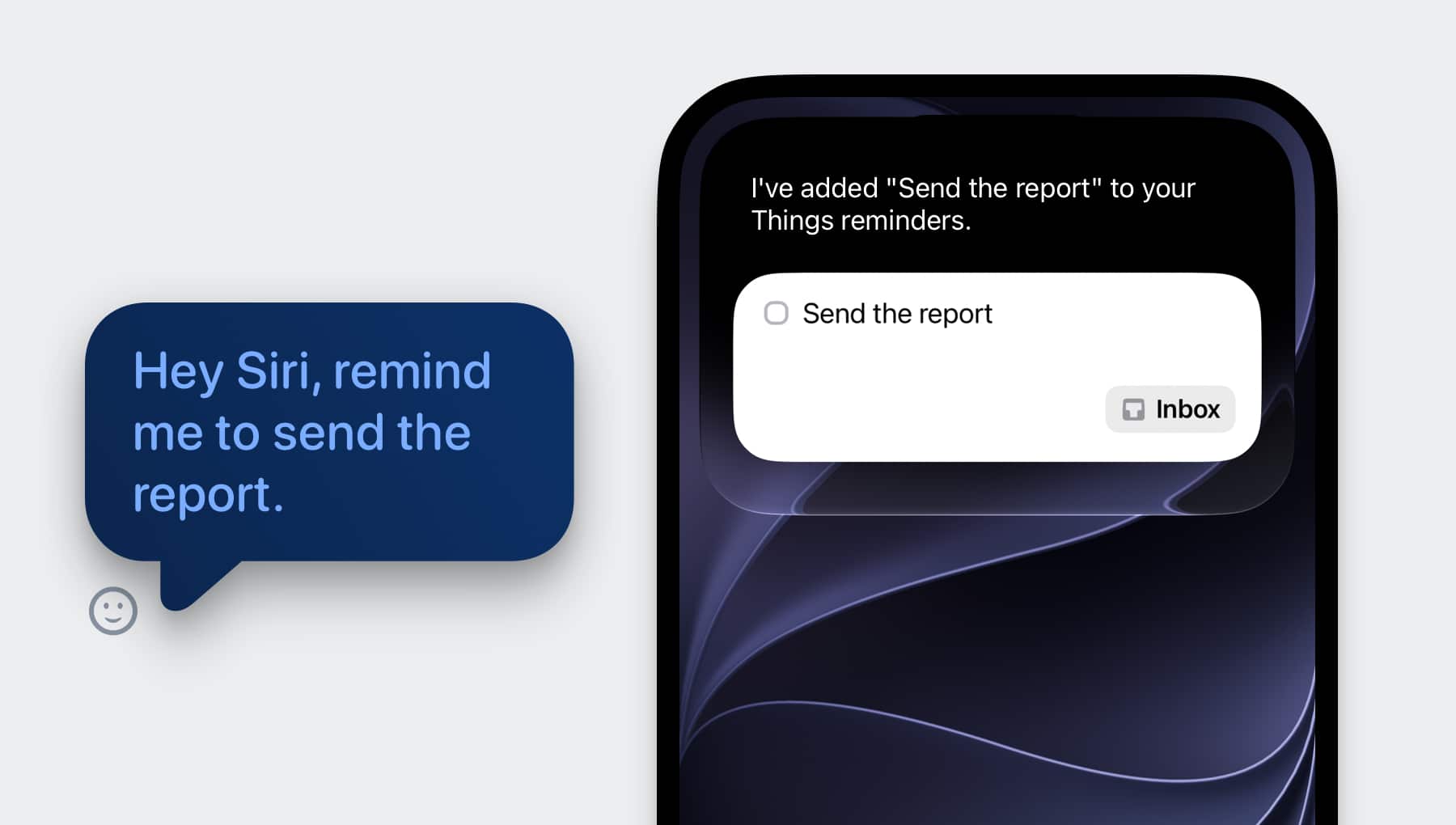
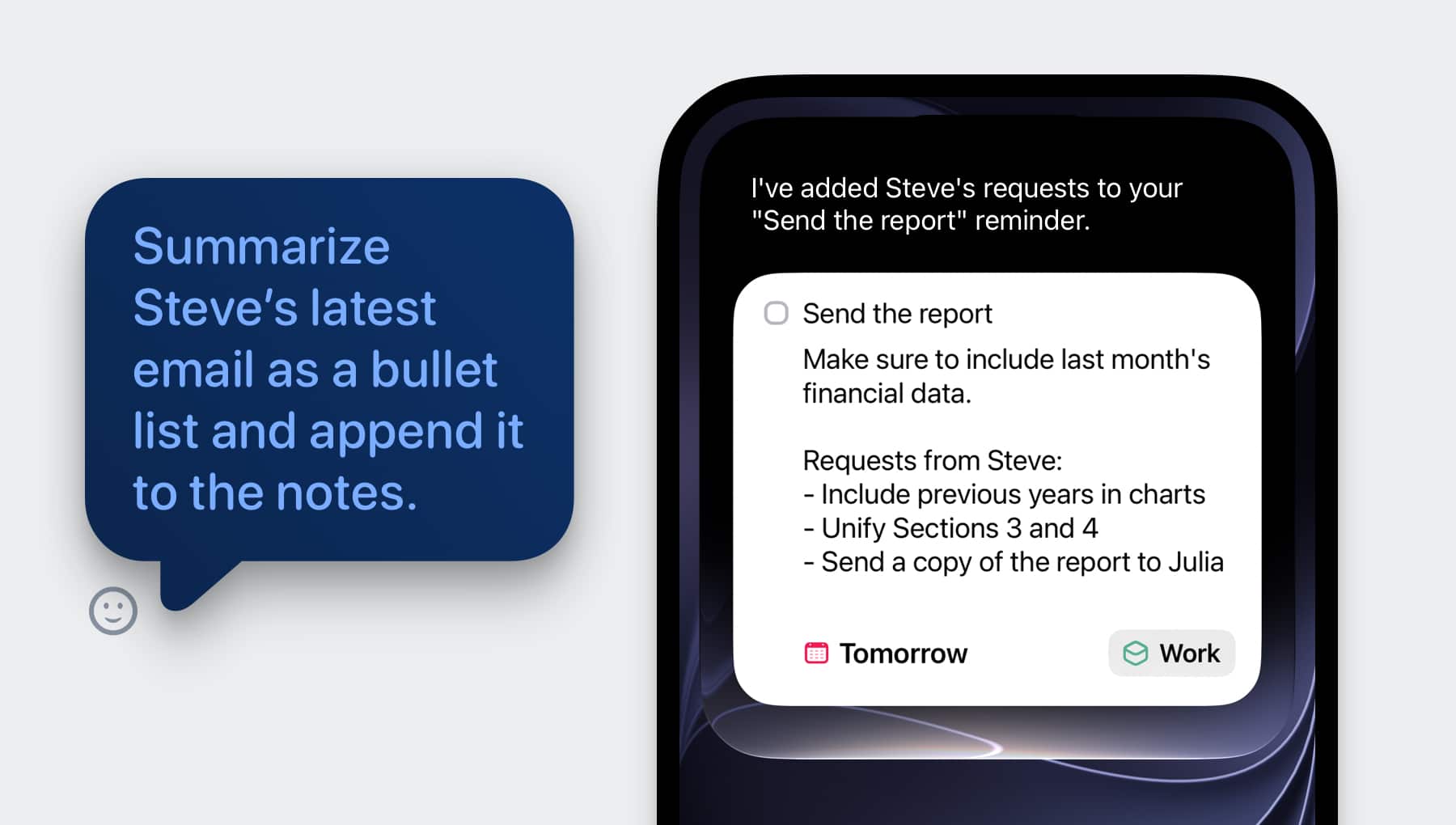
The new Siri is much better at understanding your requests, so you can just speak as you naturally would. This is the most significant improvement in our
view – and it already works great in the beta. For example:
Siri has no problem drawing out the relevant details from your request.
So if you’ve tried dictating to-dos to Siri in the past, but gave up because it was too unpredictable, we encourage you to give it another try. More than
any other Siri improvement, we think this is probably the biggest benefit in your day-to-day.
Here are a few tips when talking to the new Siri:
At least in your first few conversations, always specify that a to-do should go to Things, or it might end up in the Reminders app.
Siri only supports a single date per to-do, namely its start date. This means you can schedule to-dos and set up alarms, but you can’t set deadlines.
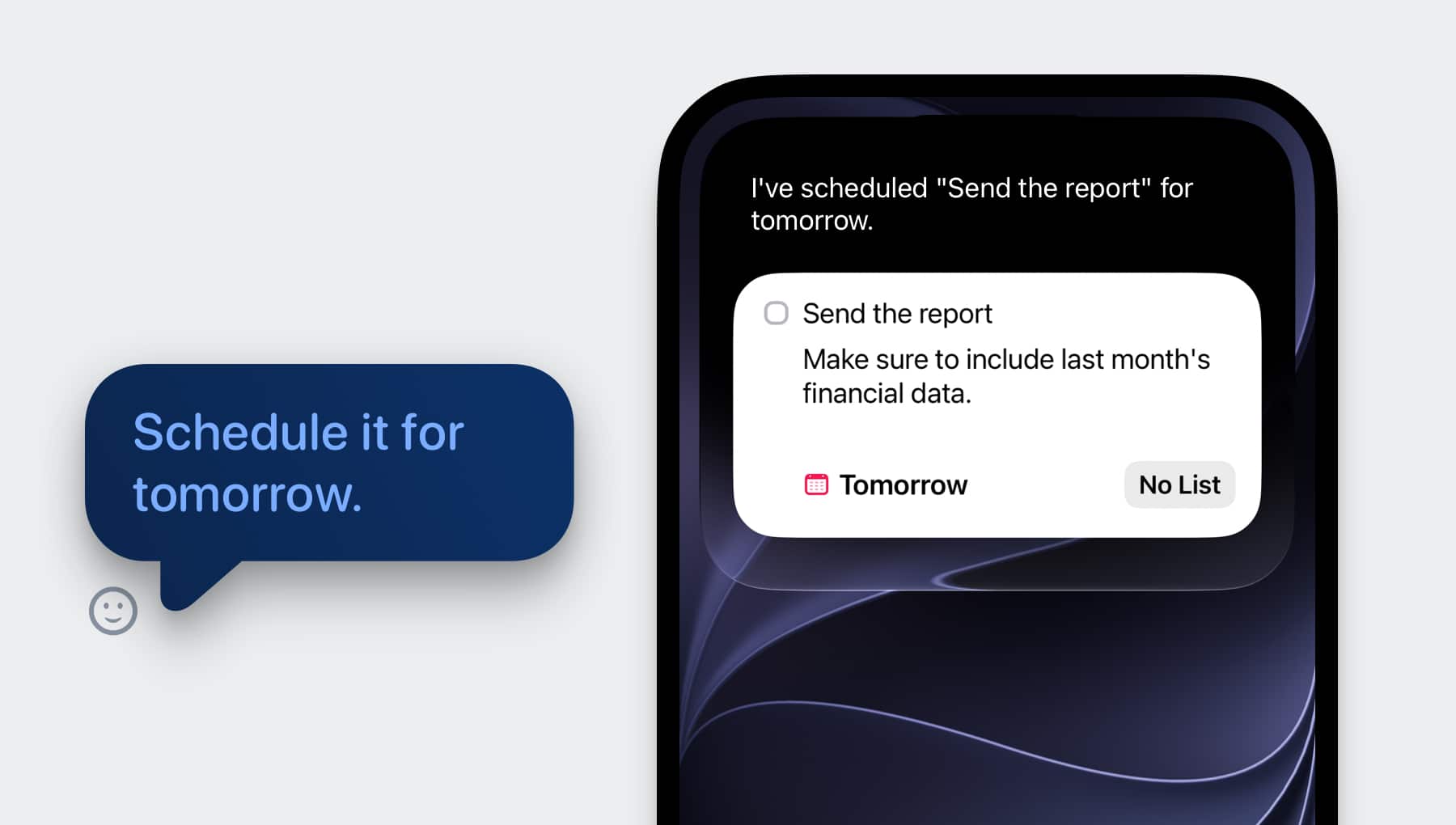
Siri doesn’t know about Things’ date-based lists like “Today” or “Upcoming”, so you can’t tell it to “move” something there. Instead, tell it to “schedule”
items for specific dates.
If you’re in an environment where you’d rather not speak, you can type to Siri instead. On iPhone, pull down on the Home Screen to reveal the keyboard, or
on Mac, hit ⌘ CmdSpace.
Keep the conversation going
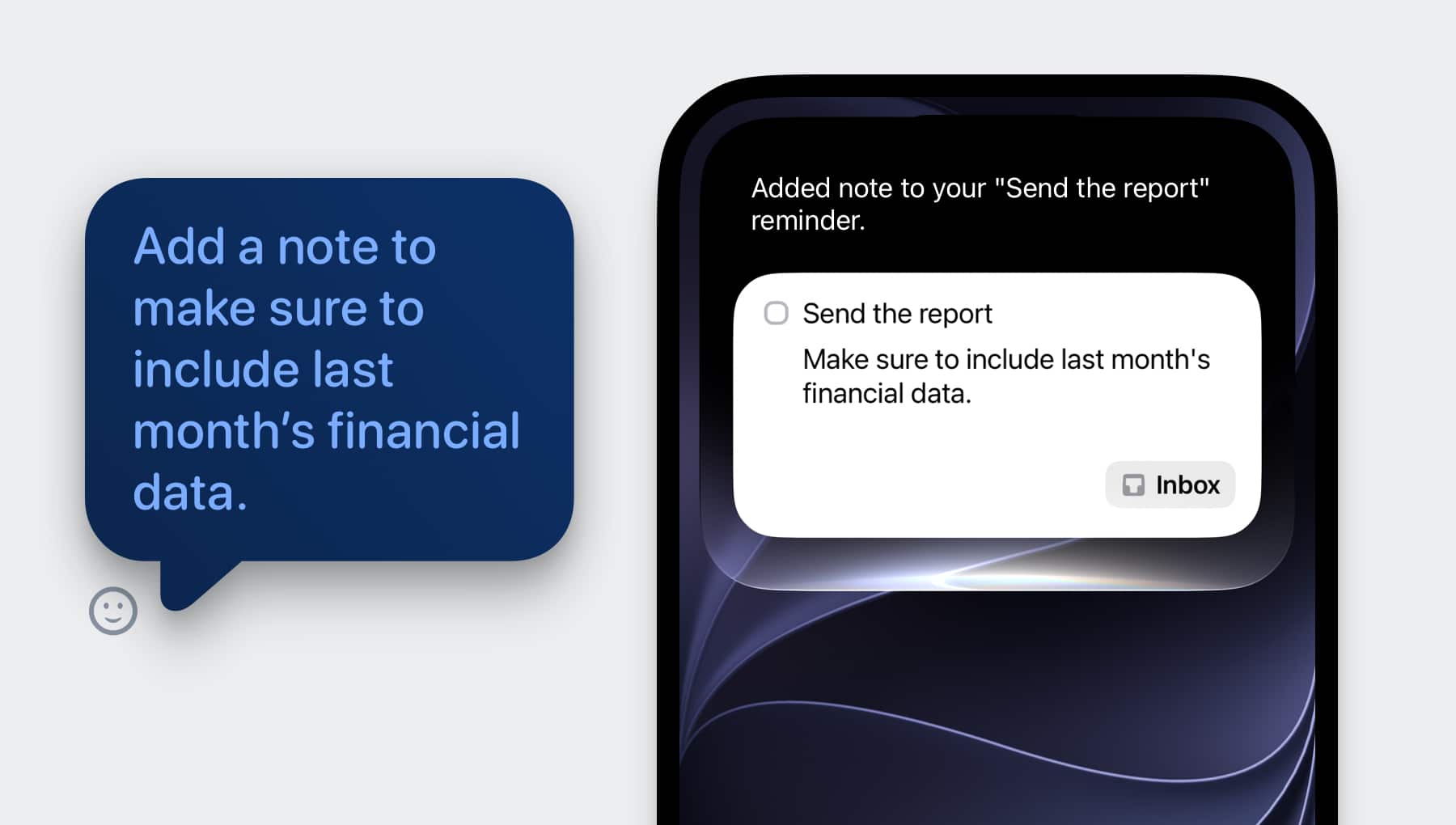
Another shortcoming of the old Siri was that you could only speak once – it wasn’t a conversation. With the new Siri, you can keep the conversation going
to make a correction or add more information.
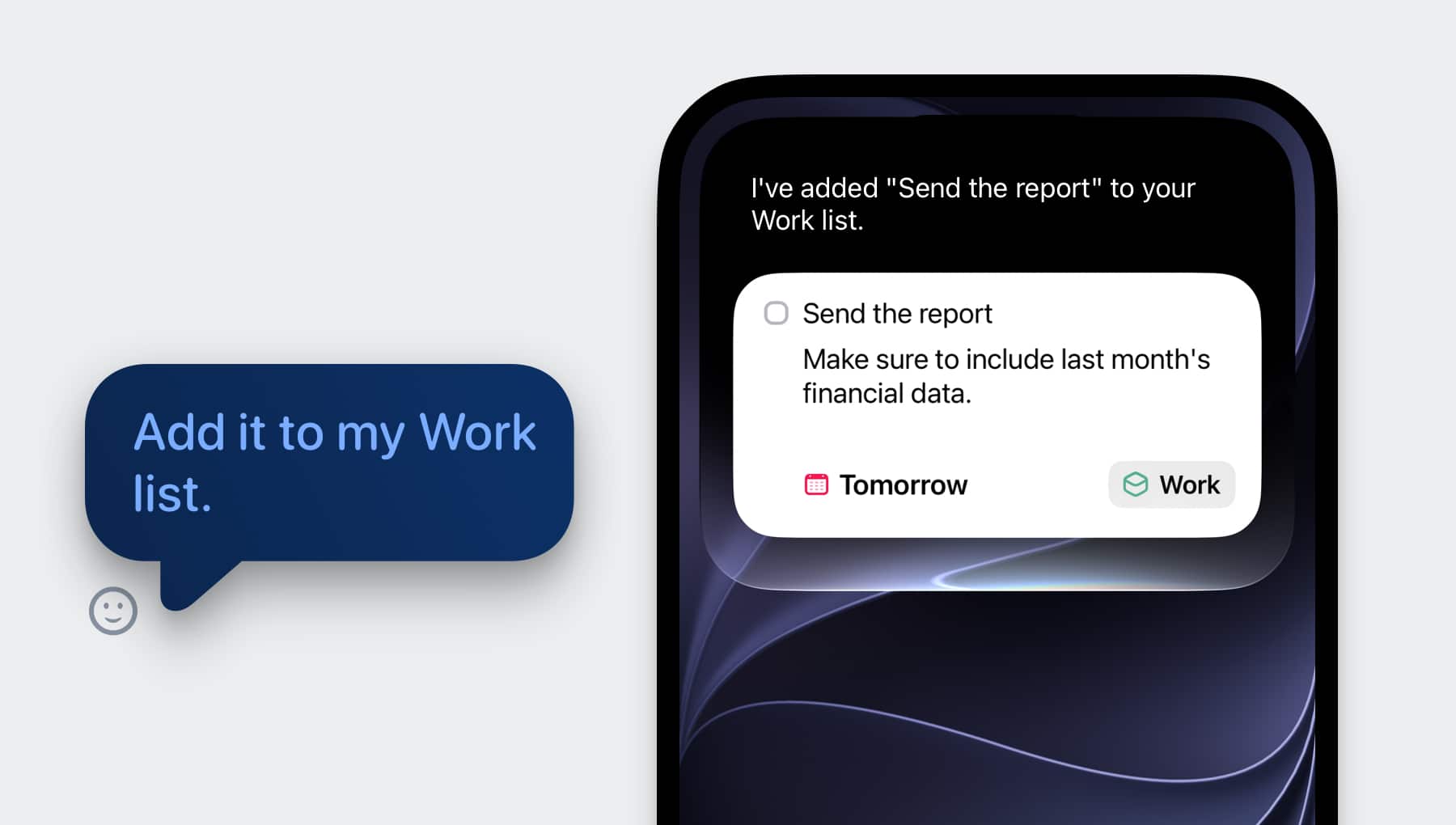
Here’s an example of a conversation you might have that gradually builds up a new to-do:
1
2
3
4
5
Please note:
During a conversation, Siri might sometimes switch the little preview of your to-do from looking like Things to looking like Reminders. Don’t let that
throw you off – your data is still stored in Things, so you can continue the conversation as usual.
Sometimes, Siri might not find an existing project or area, and as a result fail to move your to-do there. You can ask it to try again.
Chat in the new Siri app
You can also chat with Siri in the dedicated Siri app, and Things is available there as well. For example, after researching a topic with
Siri, you can ask it to save any resulting to-dos in Things.
The new Siri app can send info from your chats to Things.
Spotlight
We’re bringing another new feature to Things today that many of you have requested: full integration with Spotlight, your device’s built-in
search. This does two things:
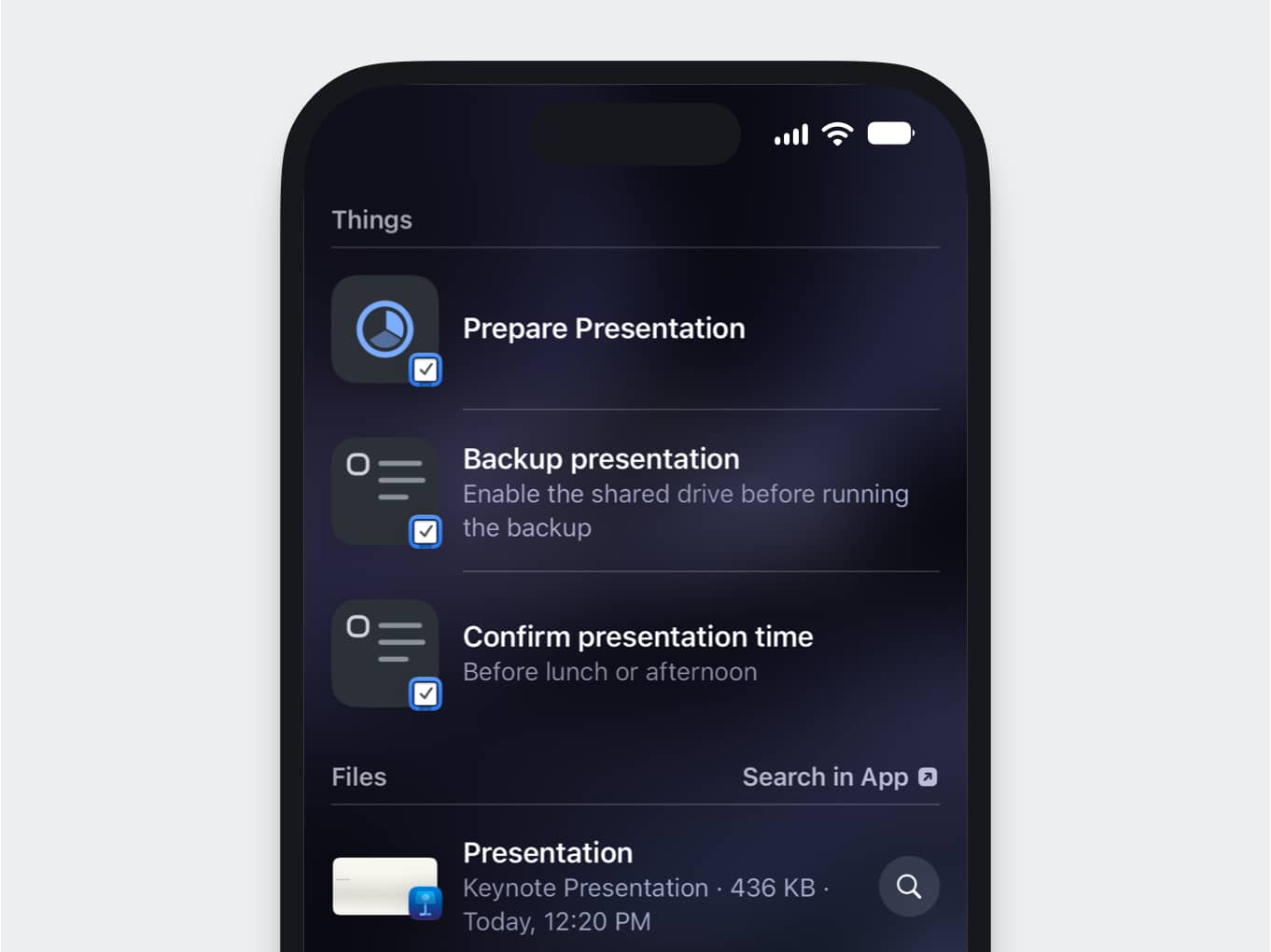
Your to-dos and projects from Things can now show up when you search in Spotlight itself – alongside your messages, emails, and other content from your device.
If you choose to use Siri AI, it can search within Things, and draw on your data as broader context for your chats.
You can now search for to-dos and projects in Spotlight.
Please note that the results you see in Spotlight or Siri are selected by the operating system, so Things has limited control over which items are surfaced.
If you’d prefer not to see your to-dos in Spotlight or Siri, you can disable Spotlight integration in Things’ Settings.
Things’ integration with Spotlight requires OS 27.
Snoozing Notifications
We’ve made some great improvements to the notifications you receive for time-based reminders in Things.
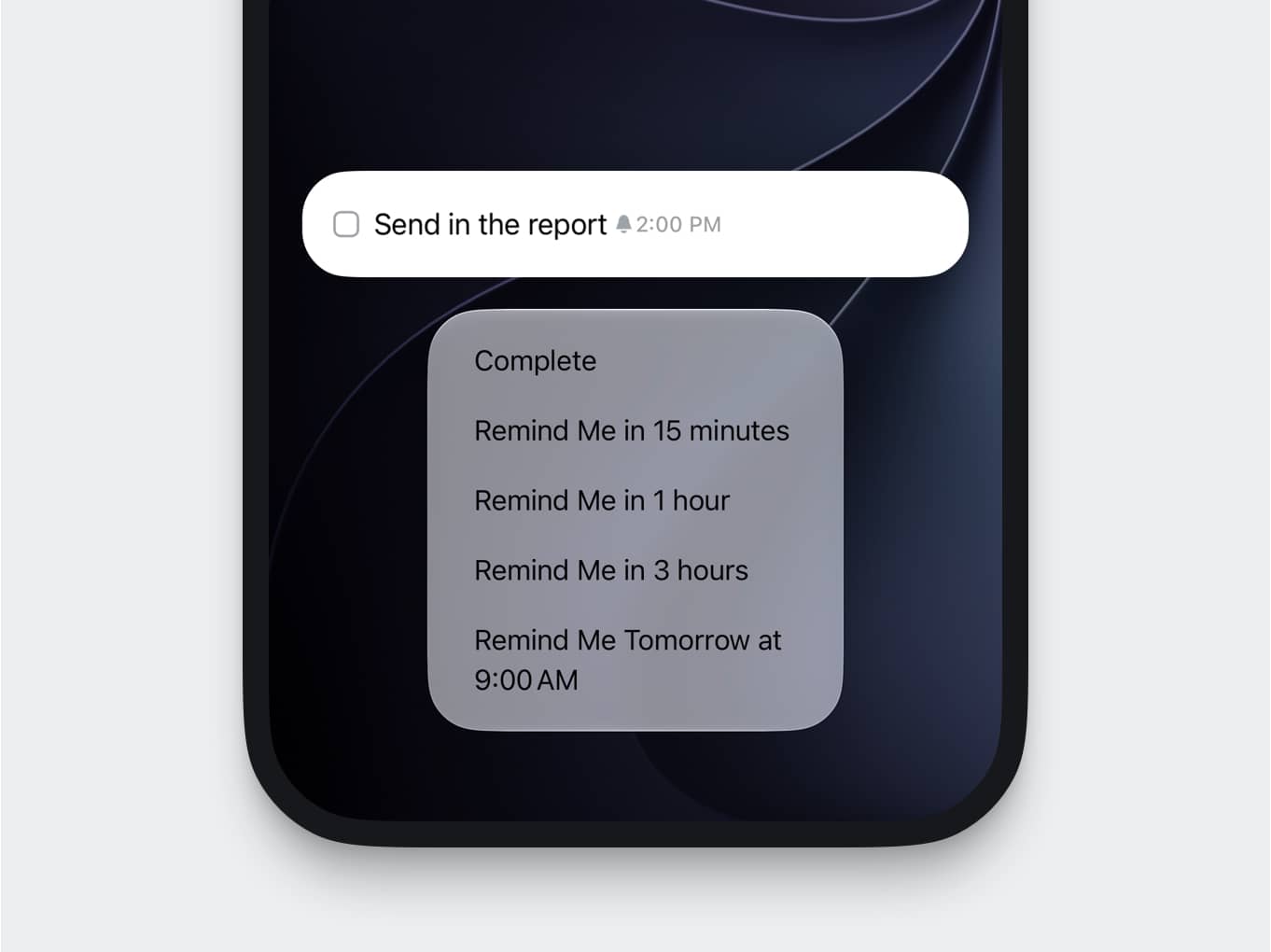
First, they’re faster. When you press & hold the notification, the snooze options now appear immediately – no extra tap required.
Second, there are better options. You can choose from a wider range of snooze intervals, including for the first time, an option to snooze until tomorrow.
And finally, the same options are now available across all your devices – including Apple Watch.
You can snooze faster, with more practical durations, and a new Tomorrow option.
There’s also a new extra-tall widget available on all devices,
giving you more room to see longer lists at a glance. Plus we’ve made refinements throughout the app to make Things feel right at home on OS 27, including
adjustments to the new glass effects.
We hope you enjoy this update. Have fun talking to Things! ✨
Things 3.24 is available now as a free update on the App Store for Mac, iPad,
iPhone, Watch, and Vision Pro. Remember
to update to OS 27 for access to new features. For Siri AI’s availability, see Apple’s website.
Repeating to-dos just got far more flexible, with two highly requested improvements: You can now complete them early, and easily reschedule them when plans change! Plus many more refinements throughout. Available now in Things 3.23.
Repeating to-dos are great for managing the routines in your life. There are two kinds. Some to-dos repeat regularly on a fixed schedule – for example,
a weekly chore, a monthly bill, or a yearly birthday. Other to-dos repeat only after you complete them, such as watering the plants a few days after
the last time, or getting a haircut a few weeks after the last one. Once you’ve set up the repeating rule you want, you can rely on Things to surface the
next copy on the right day, making sure that nothing slips.
Today, we’re happy to introduce two great new features that make repeating to-dos more flexible and easy to use.
Complete them early
Sometimes you’re on a roll and want to knock things off ahead of schedule. Now you can! Repeating to-dos now show a regular checkbox, just like any other
to-do – simply click or tap it to complete the repeating to-do early. Things will then schedule the next copy based on its existing rule.
Previously, repeating to-dos could not be completed before they arrived in Today.
Repeating to-dos now have a checkbox, so you can complete them early 🎉
Before
Now
Reschedule them with ease
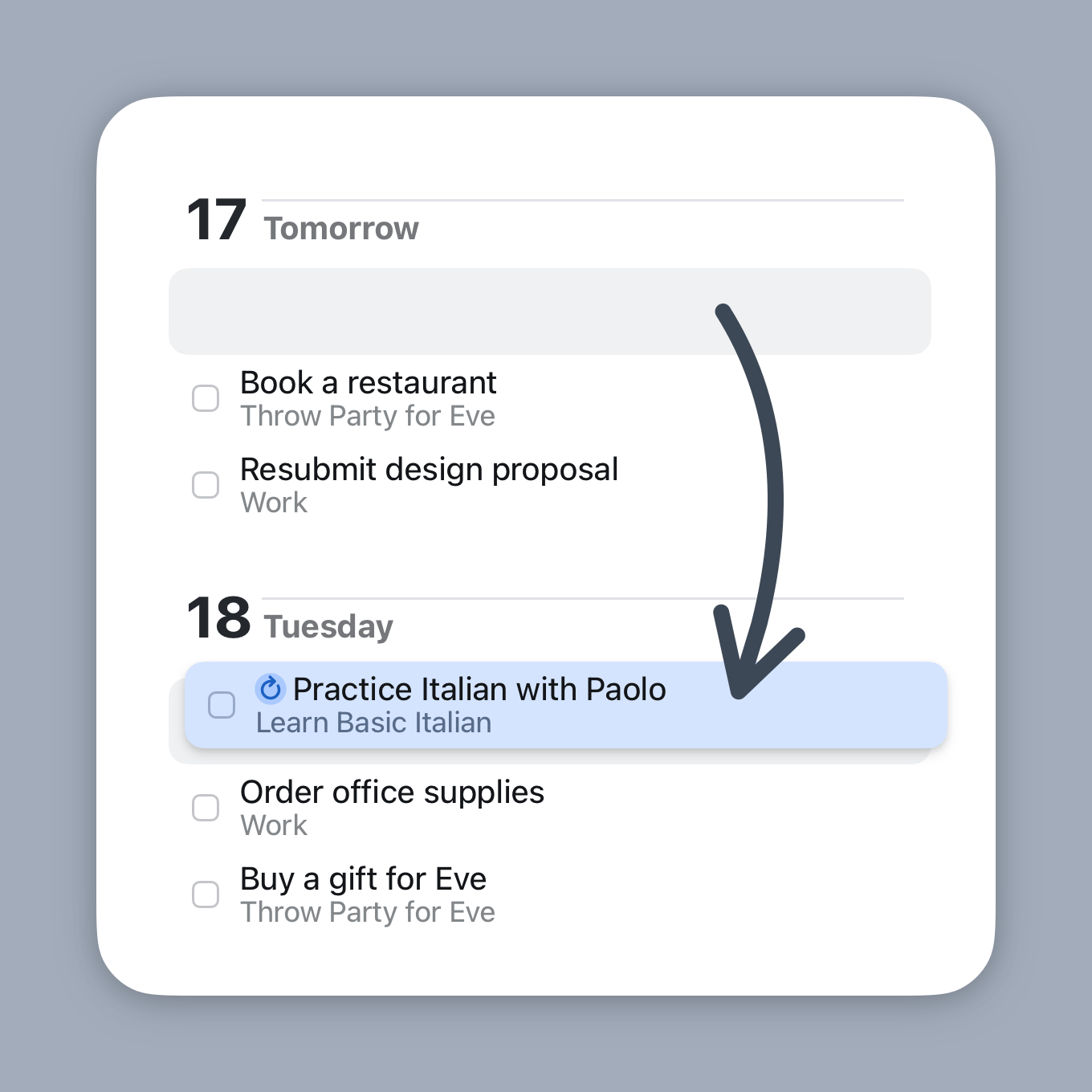
Plans change all the time, and now your repeating to-dos can easily adapt. Simply move one to a new date to reschedule it, just like you would with any other
to-do.
You can now easily reschedule repeating to-dos
If a to-do repeats regularly on a fixed schedule, moving it breaks the pattern. So you’ll need to make a choice:
Make Exception. This moves just this one copy to the new date, leaving the rest of your schedule untouched.
Update Rule. This changes the repeating rule itself, so that all future copies follow the new date. For example, say a to-do repeats
every Monday. If you move it to Tuesday and choose Update Rule, it will repeat every Tuesday from then on.
If the to-do repeats after completion, there’s nothing to decide – it simply moves to the new date, no questions asked.
See them all in one place
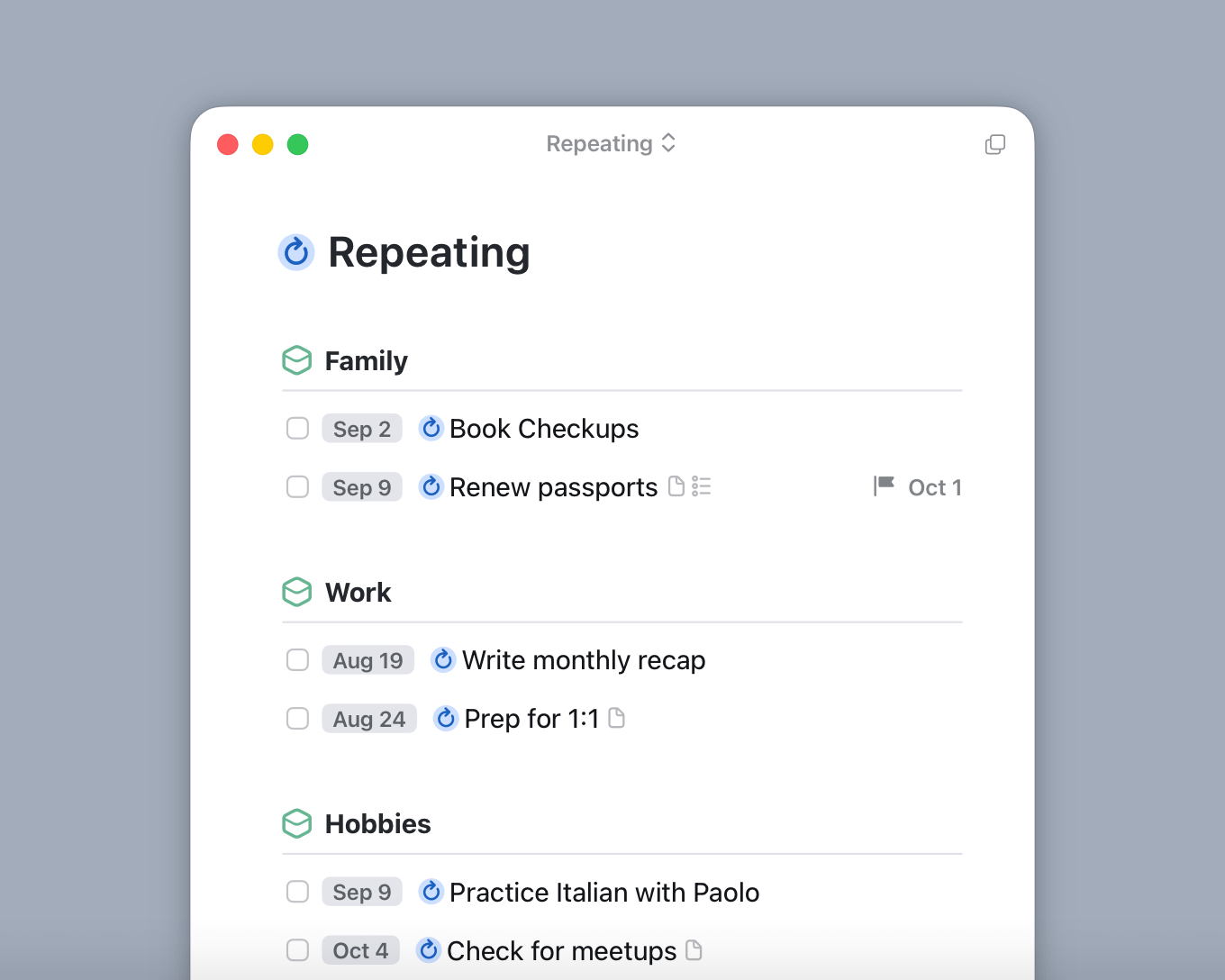
Did you know Things has a handy list that gathers all your repeating to-dos and projects in one place? It’s a great way to quickly view your setup and make
a few tweaks.
To access the list, type “Repeating” into Things’ search field and select it from the results. The list will show the repeating to-dos themselves, and also
any upcoming copies they’ve generated.
The handy Repeating list shows all your repeating to-dos and projects in one place.
And more
You’ll also notice refinements throughout:
Sometimes you don’t just want to complete a repeating to-do early – you want to work on it ahead of time, adding custom notes or completing checklist items
before its scheduled date. Choose Repeat → Create Next Copy to get started early.
The same goes for repeating projects. Create the next copy early so you can start adding, editing, or completing to-dos inside of it.
All generated copies of repeating to-dos now show a little grey repeat icon, so you can tell where they came from.
The repeating to-do setup dialog has a fresh new look, and makes it easier to pick the date for the next copy.
You can now pause, resume, and stop multiple repeating to-dos at once.
Last but not least, this update includes a big change under the hood, one we’ve been working on for some time: the display and editing of to-dos is now driven
by the same code across Mac and iOS.
Things 3.23 is available now as a free update on the App Store for Mac, iPad, and
iPhone.
We hope you enjoy the new features!
This update requires at least macOS 13.3, iOS & iPadOS 16.4, watchOS 9.1, and visionOS 26.
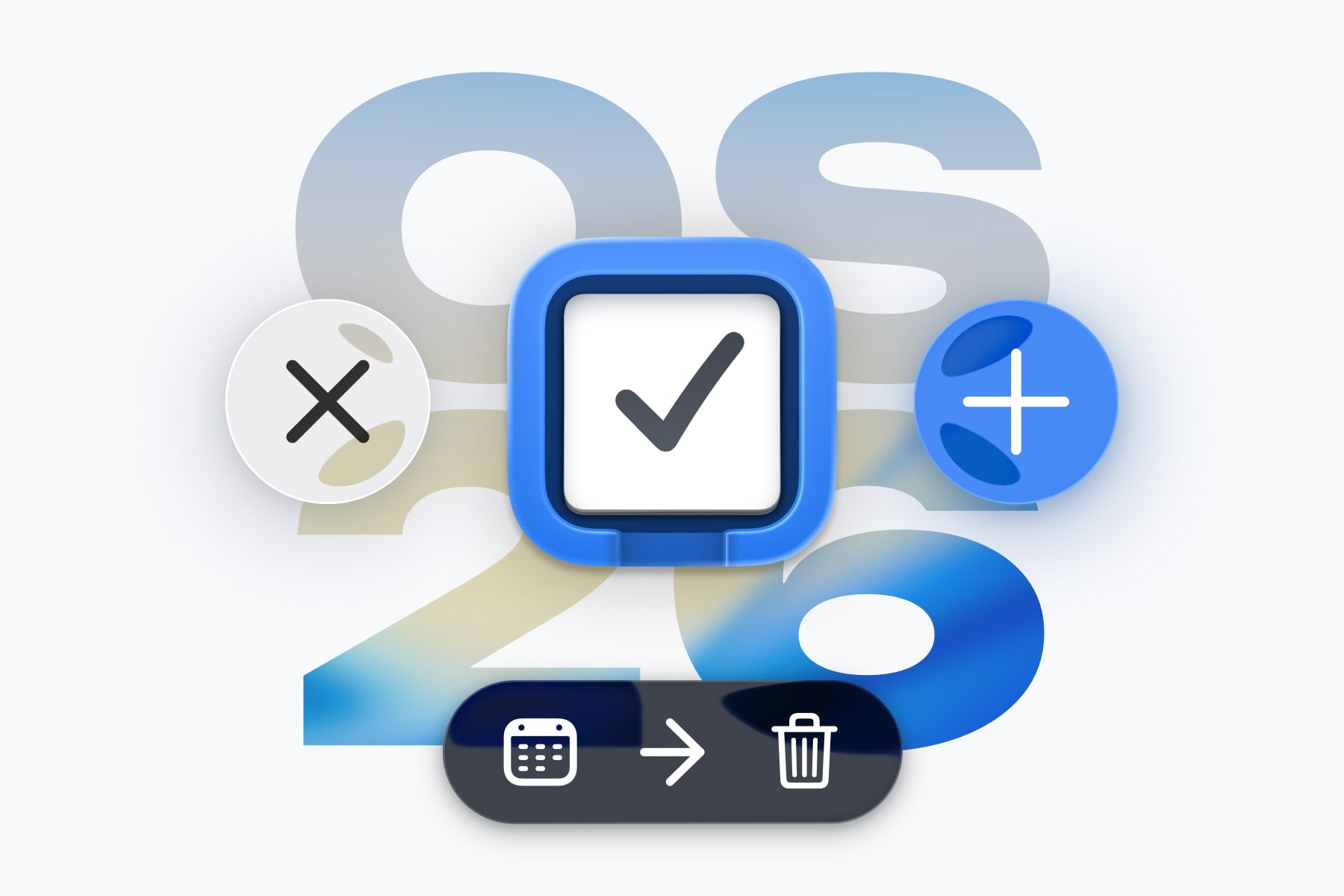
Things is ready for Apple’s OS 26, with a thoroughly refreshed
interface, a new app icon, better windowing on iPad, and many more improvements. Available now in Things 3.22!
Things gets a fresh new look on OS 26.
A new icon
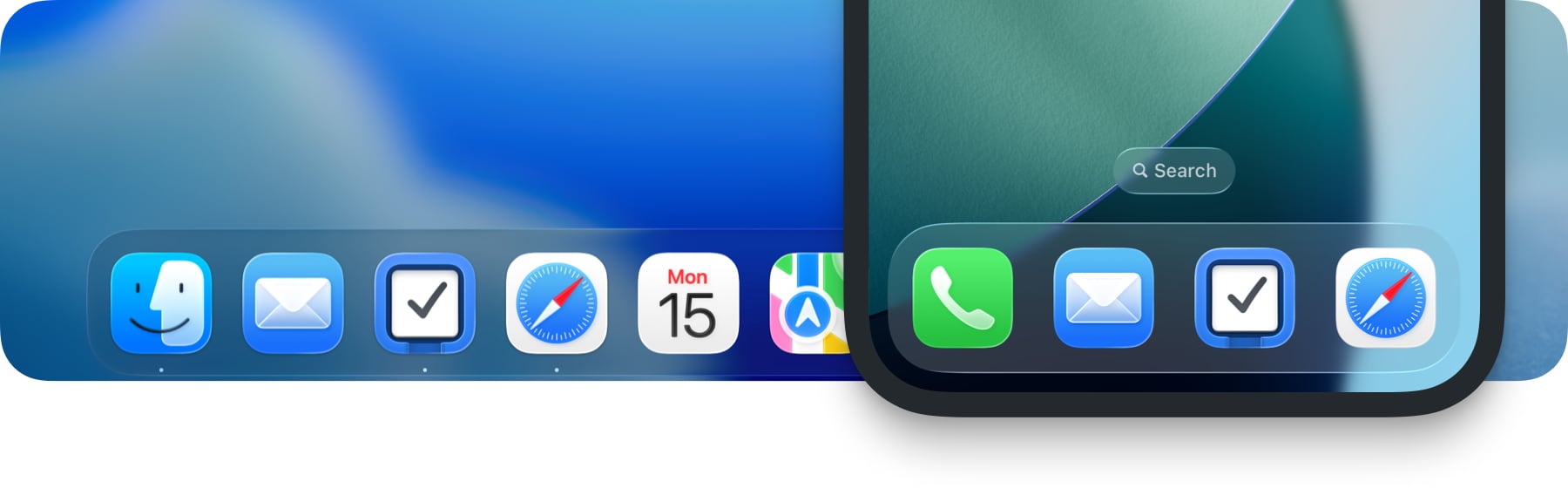
The first thing you’ll spot is Things’ iconic blue box, refined and realigned to sit beautifully within OS 26. It’s familiar at a glance and unmistakably
Things.
This new icon is available in four variants – Default, Dark, Tinted, and Clear – to match whatever appearance style you choose for your device.
New Icon
Old Icon
Fresh look & feel on OS 26
We’ve tastefully refreshed Things’ interface. You’ll notice adjustments everywhere: in the curvature of windows, to-dos, dialogs, and controls; wider spacing
that feels a bit more relaxed; and a touch of glass in the sidebar that lets a hint of color shine through. We think it’s the most beautiful version of Things
yet!
But it’s more than looks – it also feels new. Throughout the interface, you’ll interact with new glassy buttons that respond to your touch with a subtle glow
and scale. A great example is the blue Magic Plus button. As you drag it around, notice its new liquid nature – it ever so slightly deforms its shape in
response to your movements.
iPhone
iPad
Mac
iPad windows and menus
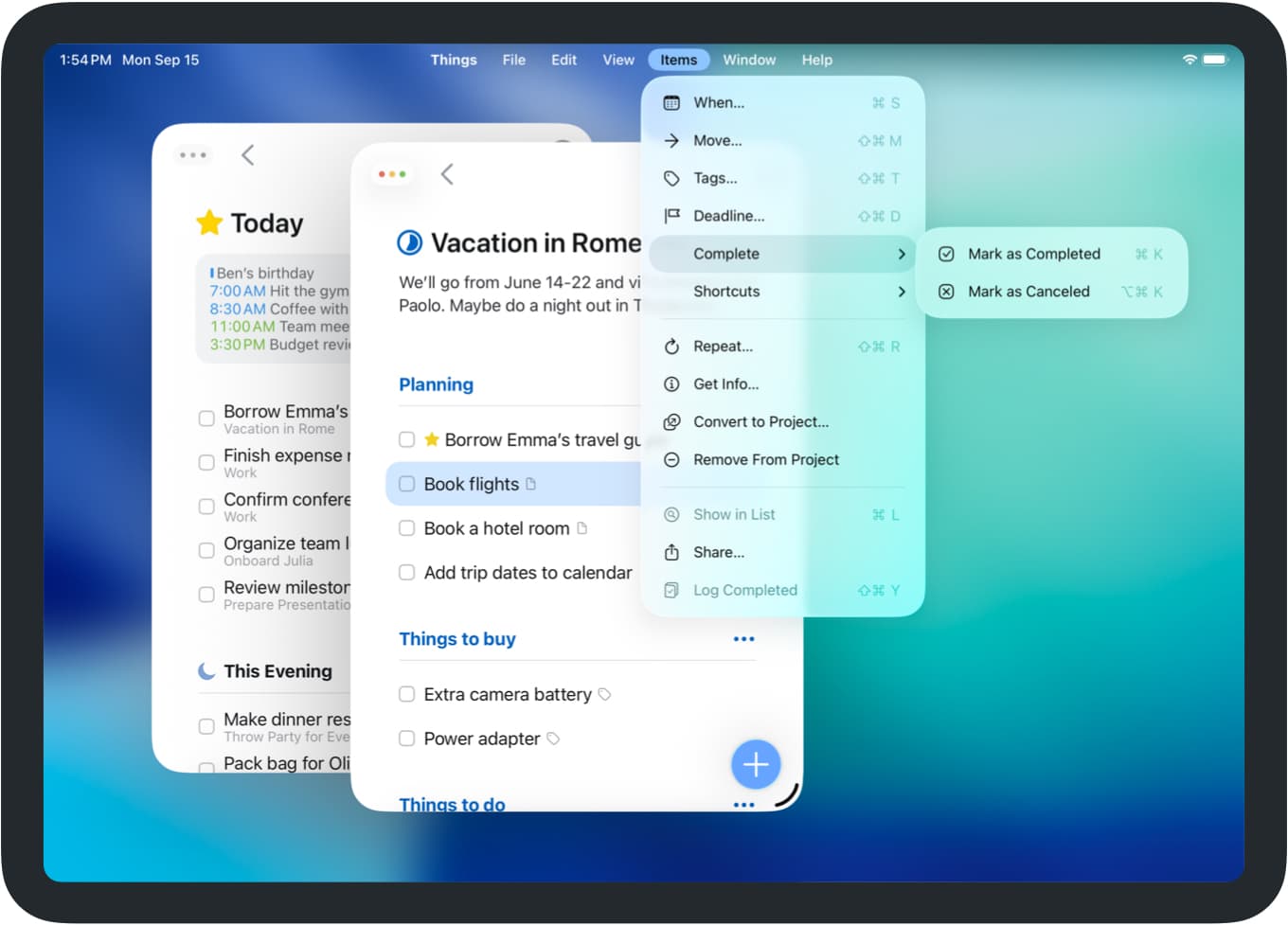
On iPad, OS 26 brings some welcome Mac-like improvements. To try them out, you’ll need to switch to the new Windowed Apps mode in your device’s Settings.
Things smartly adapts its layout for the new mode. Your windows get traffic light controls, and you can arrange them freely on your screen. To open a new
window in Things, right-click a list and choose Open in New Window, or go to File → New Window.
If you swipe down from the top edge of the screen, you’ll see that there’s also a new menu bar. We’ve updated Things’ menus to expose many powerful controls
and keyboard shortcuts.
Taken together, these improvements do a lot to make Things on the iPad feel more powerful and natural to use. We’re enjoying it a lot!
Things inherits some Mac-like powers on iPadOS 26.
New widget styles
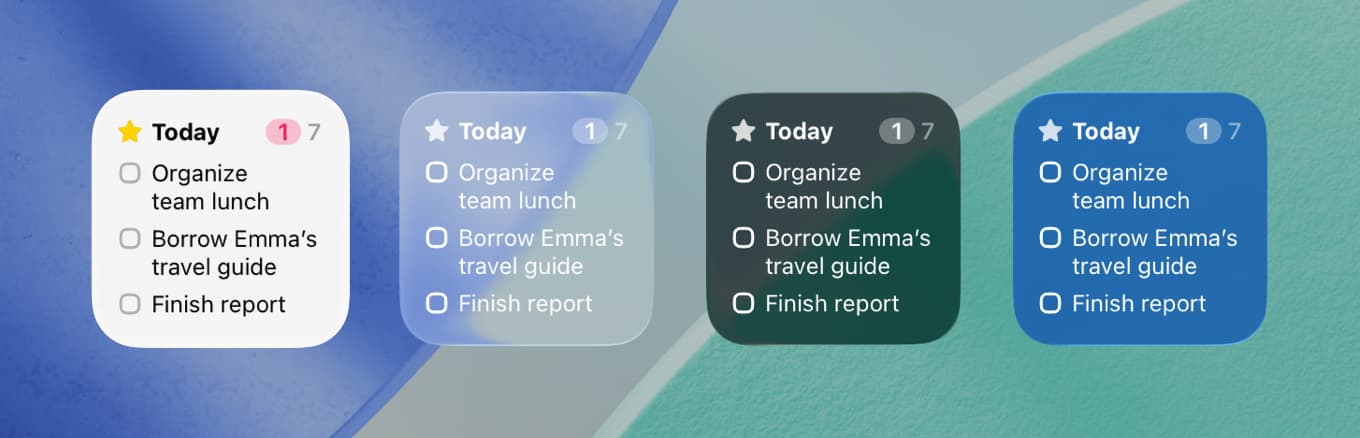
Last year, we updated Things’ widgets to support styles on iPhone and iPad. These styles are now available on the Mac as well. In addition to the
Dark and Tinted styles, OS 26 introduces Clear – a glass-like style that lets your wallpaper shine through.
Widget styles – including the new “Clear” – are now available across Mac, iPad, and iPhone.
Quick controls on Mac and Watch
Things’ handy Control Center controls are now available on Mac and Apple Watch.
On Mac, Things offers Controls for New To-Do and List (you choose which list). You can place them in Control
Center, or pin them to your menu bar for one-click access.
On Apple Watch, Things’ New To-Do Control lets you capture a thought on the go, via swipe, type, or talk.
And more
Widgets on Vision Pro. We’ve brought Things’ widgets to Vision Pro. You can place as many as you like in your space and choose which list
to show, such as Today, Deadlines, a project, or a tag.
Writing Tools on Vision Pro. We’ve added support for Apple’s Writing Tools on Vision Pro. You can use it to quickly proofread, rewrite,
summarize, or reformat the text in your notes.
Spotlight on Mac can now create to-dos. Type “Create To-Do”, press Return, then enter your title. Your new to-do is created in your Inbox,
even if Things isn’t running.
Apple Shortcuts has a new Use Model action that lets you bring AI into your workflows with Things. Use on-device or cloud models
to create new to-dos with AI-assisted writing, or pull data from Things via its Find Items action and pass it to the AI model as context. Learn more
about Things’ actions for Apple Shortcuts.
Get it now
Things 3.22 is available today as a free update on the App Store for Mac, iPad,
iPhone, Watch, and Vision Pro.
Note that you’ll also need to install OS 26 for the new design and features to show up!
We hope you enjoy the new look and other great refinements. ✨